


THE CALM IS OVER AND UNCERTAINTY IS BACK
Just days ago, markets were celebrating what looked like a breakthrough in U.S.-Iran relations. Today, that optimism is being tested. The Geneva meeting that was supposed to move the peace process forward has reportedly been postponed, while Iran says it will not proceed with implementation of key parts of the agreement until military operations in Lebanon stop.
At the same time, Israel has continued operations in southern Lebanon, and both Iran and U.S. have reportedly canceled their trips to Switzerland.
THE PEACE DEAL IS ALREADY UNDER PRESSURE
Iran is reportedly warning that it could withdraw from the memorandum of understanding if Israel does not immediately halt military operations in Lebanon.
According to Fars News Agency, Tehran has delayed participation in the next phase of negotiations and says it will not fulfill its obligations until what it describes as a ceasefire in Lebanon is achieved.
The timing is important because markets had already begun pricing in lower oil prices, easing geopolitical tensions, higher Iranian oil exports, and a more stable macro environment. Recent developments are forcing traders to reassess those expectations. While the peace agreement technically remains in place, implementing it is proving far more difficult than signing it.
CRYPTO IS FEELING THE PAIN
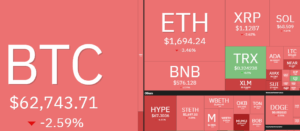
Crypto continues to be the first asset class punished whenever uncertainty rises.
Over the last 24 hours:
- $449.7 million in positions were liquidated
- $363.9 million came from longs
- $85.9 million came from shorts
- Nearly 120,000 traders were liquidated
The bigger story is the trend. Since June 13, liquidation activity has been steadily increasing as traders repeatedly attempt to front-run a recovery.
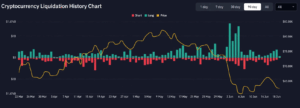
Every positive peace headline attracts fresh leverage. Every escalation headline forces those positions out. Volatility is rising. Conviction is not.
TRADERS ARE REDUCING ALTCOIN EXPOSURE
One of the more concerning developments is what we’re seeing in altcoin derivatives. Altcoin open interest has fallen sharply from the highs seen in May, dropping from above $40 billion to roughly $35 billion.
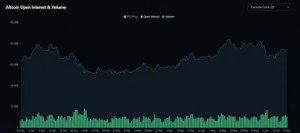
For altcoins to move higher, markets will likely need a stabilization in geopolitical tensions and a return of risk appetite. Until then, traders appear reluctant to aggressively position for an immediate recovery, keeping pressure on the broader altcoin market.
BITCOIN’S NEWEST RISK MAY BE STRATEGY ITSELF
One of the biggest concerns emerging in crypto right now isn’t coming from the Fed. It’s coming from Michael Saylor’s funding machine. Strategy’s preferred stock, STRC, just hit another all-time low near $82.
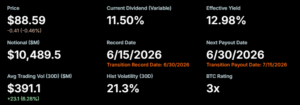
STRC is one of the vehicles Strategy uses to raise capital for buying Bitcoin. The model only works efficiently when STRC trades near $100. Below that level, issuing new shares becomes increasingly difficult because Strategy would be raising capital at a discount while still carrying obligations based on the full $100 value.
The market’s concern intensified after Strategy sold 32 BTC in late May to help cover obligations tied to STRC. That sale introduced a new fear: What happens if Bitcoin weakens, STRC continues falling, and Strategy needs to rely more heavily on its BTC holdings?
The concern is that a negative feedback loop could begin to develop. As STRC falls further below its $100 par value, dividend costs and cash obligations become more burdensome, increasing pressure on Strategy’s reserves. If that pressure eventually leads to Bitcoin sales, it could weigh on BTC’s price, creating even more stress on STRC. The deeper STRC trades below par, the more investors are likely to question the long-term sustainability of the structure.
BITCOIN REMAINS UNDER PRESSURE
BTC continues to struggle as macro uncertainty and miner stress weigh on sentiment. According to JPMorgan, Bitcoin has traded below its estimated production cost of roughly $78,000 for five consecutive months. As a result, nearly 20% of miners are operating at a loss.
Publicly listed mining companies sold more than 32,000 BTC during Q1 2026 alone, exceeding their total Bitcoin sales throughout 2025.
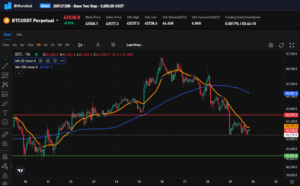
From a technical perspective, Bitcoin recently lost the $63,000 support area and remains below both the 20-period and 100-period moving averages on the 4-hour timeframe. Bulls need to reclaim the $63.5K region and eventually push above the 100MA near $64.9K to regain momentum. Until then, rallies are likely to be viewed as relief bounces. On the downside, the $62K region remains the key support zone. A decisive breakdown could open the door toward $61K.
OIL IS STARTING TO PRICE RISK BACK IN
Crude oil is quietly recovering a significant portion of the losses that followed the U.S.-Iran agreement. The initial selloff was driven by expectations of increased Iranian oil exports, lower geopolitical risk, and easing energy prices. However, recent developments are beginning to challenge that narrative, forcing markets to reassess whether those assumptions were premature.
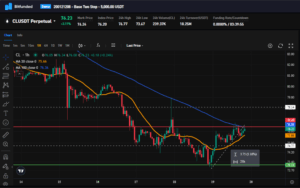
CL has rallied more than 5% from its recent lows as traders begin pricing geopolitical risk back into the market. It is testing the key $76.4 resistance zone. A successful breakout could open the door toward $78 and potentially the recent highs if tensions continue escalating. The $75 area remains the key support level. As long as oil holds above that zone, the short-term trend remains constructive.
CFX IS SHOWING RELATIVE STRENGTH
Conflux has been one of the stronger-performing altcoins over the past two weeks. After taking support from the $0.043 region, it has rallied back toward major resistance near $0.050.
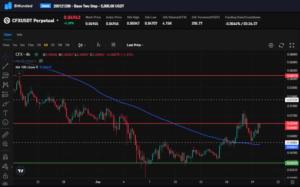
The token has successfully reclaimed its 100-period moving average and continues to print higher lows despite broader market weakness. However, this is the key test. A breakout above $0.050 could open the door toward $0.055 and potentially $0.060. Failure here would likely result in a pullback toward the 100MA near $0.046.
XRP IS LOSING MOMENTUM
According to on-chain data, whales have distributed more than 30 million XRP over the past five days. It remains trapped below major resistance after failing to hold its latest breakout attempt.
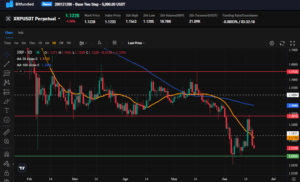
Price was rejected near $1.28 and has since fallen back below the 20-day moving average.
The key level to watch remains $1.08. A breakdown below support could extend the current downtrend. Bulls need to reclaim $1.17 and then $1.28 to shift momentum back in their favor.
DOT IS BECOMING A CONTRARIAN BET
Polkadot has quietly become one of the most discussed assets in crypto. Not because traders are bullish but because many are questioning its long-term relevance. According to Santiment, social discussion around DOT has surged while sentiment has fallen toward some of its weakest levels in months. Historically, that combination can be worth monitoring.
Some of crypto’s strongest relief rallies emerge when attention is high but confidence is low.
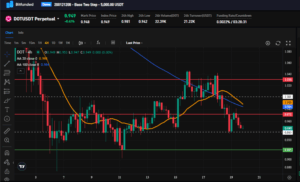
Technically, DOT remains below both its 20-period and 100-period moving averages.Support sits near $0.94 and then $0.915. A reclaim of $0.97-$0.99 could trigger a move back toward the $1.03 resistance zone. For now, sentiment remains bearish. Which is exactly why some traders are beginning to pay attention.
WHAT TO WATCH
1. PEACE TALKS: Markets are watching whether delayed negotiations can get back on track before tensions escalate further.
2. OIL: Uncertainty is pushing oil higher as traders begin rebuilding the risk premium.
3. BITCOIN: Needs to reclaim $64K soon or risk sentiment could deteriorate further.
4. ALTCOINS: Falling open interest suggests traders remain defensive, leaving altcoins vulnerable to further downside.
The market spent the last two weeks pricing in peace. Today, it is being forced to price in uncertainty again.
TRADE GLOBAL VOLATILITY WITH BITFUNDED
Markets are moving fast, and volatility continues creating opportunities for prepared traders.
👉Access funded trading accounts
👉Keep your personal capital protected
👉Scale positions with confidence
👉Take advantage of market-moving events
START TRADING WITH BITFUNDED
THE BITFUNDED TEAM