


THE MARKET JUST FOUND TWO NEW REASONS TO SELL
Markets entered the week hoping for stability. Instead, they were hit by two major developments. Inflation is moving higher again, forcing investors to rethink expectations for Federal Reserve rate cuts, while geopolitical tensions in the Middle East are once again escalating ahead of the weekend.
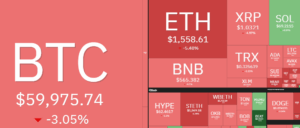
Bitcoin has slipped back below $59K, AI stocks are facing fresh selling pressure, Asian markets posted sharp losses, and institutional investors continue pulling money from crypto ETFs.
While the long-term outlook for both AI and crypto remains intact, the short-term environment has become significantly more challenging.
THE FED HAS ALMOST NO ROOM TO CUT RATES
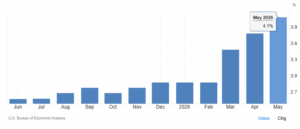
Markets received another reminder that inflation remains the Federal Reserve’s biggest problem. The latest PCE Price Index, the Fed’s preferred inflation gauge, accelerated to 4.1% year-over-year, the highest reading in three years and more than double the Fed’s 2% target.
At the same time, the broader economy continues showing remarkable resilience. First-quarter GDP was revised higher to 2.1%, well above expectations. The labor market also remains strong, with initial jobless claims falling to 215,000, beating forecasts and signaling companies are still holding onto workers. Consumers continue spending despite elevated interest rates.
Personal spending rose 0.7% in May, while core durable goods orders increased 1.3%, highlighting continued strength in business investment. Taken together, the picture is becoming increasingly clear. Inflation is rising. Consumers are still spending. The labor market remains tight. Economic growth remains resilient.
That combination leaves the Federal Reserve with very little justification to begin cutting rates anytime soon. Instead, markets are beginning to consider whether another rate hike could become necessary if inflation continues moving away from target.
THE AI TRADE IS FACING ITS BIGGEST TEST
Just one day after Micron delivered one of the strongest earnings reports in semiconductor history, AI stocks suffered broad selling pressure. Normally, blockbuster earnings from one of the industry’s largest memory suppliers would lift the entire sector. Instead, investors focused on a different story.
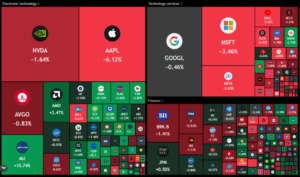
Micron’s results highlighted just how much pricing power memory manufacturers now possess. Soon after, Apple announced price increases across several products, while Microsoft raised prices on Xbox hardware and accessories. Both companies pointed toward higher component costs. Combined with the hotter-than-expected inflation report, investors began connecting the dots.
If AI infrastructure continues becoming more expensive, hyperscalers such as Microsoft, Amazon, Alphabet, and Meta may face increasing pressure on profit margins despite continued demand. The market is no longer questioning AI demand. It’s questioning who will capture the profits. For now, investors appear to be rewarding companies supplying the infrastructure rather than those building AI applications. The AI narrative remains intact.
The economics behind it are beginning to change.
GEOPOLITICAL RISKS ARE RISING AGAIN
According to U.S. officials, Iran attacked a Singapore-flagged cargo ship near the coast of Oman after warning vessels not to use shipping routes through the Strait without Iranian approval.
At the same time, Iran is reportedly proposing a new framework that would require vessels transiting the Strait of Hormuz to pay fees for security, safety, and environmental services. Iran estimates the proposal could generate as much as $40 billion annually and has already begun promoting the idea across the Middle East and to China.
Officials have even established an insurance company they say vessels should use when crossing the Strait. The proposal would significantly increase Iran’s influence over one of the world’s most important energy corridors. Roughly 20% of global oil shipments pass through the Strait of Hormuz. Any disruption, higher transit costs, or renewed military escalation could quickly push energy prices higher and add fresh inflationary pressure to the global economy.
With crypto trading throughout the weekend, traders should be prepared for increased volatility if new headlines emerge.
INSTITUTIONAL BUYERS ARE STILL STAYING AWAY
Crypto continues facing another major challenge. Institutional demand remains weak. Spot Bitcoin ETFs recorded $696 million in net outflows, marking the sixth consecutive day of investors withdrawing capital. Spot Ethereum ETFs also extended their losing streak with another $81.9 million in net outflows.
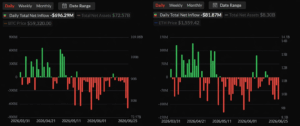
The persistent outflows help explain why Bitcoin has struggled to sustain recent recovery attempts. Retail traders may continue buying dips, but institutional investors have yet to return in meaningful size. Until that changes, rallies are likely to face stronger resistance.
BITCOIN IS LOSING A CRITICAL LEVEL
Bitcoin has once again fallen below $60K, reflecting the broader risk-off tone across financial markets. From a technical perspective, BTC has now lost the important $65.9K support level, which has turned into the first major resistance.
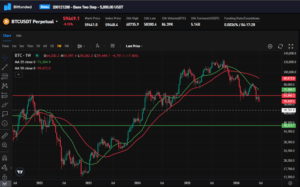
The next major support sits in the $50K-$52K region, followed by the longer-term cycle support around $38.5K. For bulls, reclaiming $65.9K remains the first major objective before targeting the moving averages overhead.
Despite the recent weakness, derivatives positioning suggests traders should not become overly bearish.
Current liquidation data shows approximately $13 billion in short positions sitting between current prices and $74K, while cumulative short liquidations rise to nearly $25 billion below the $100K level.
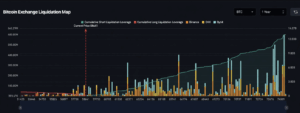
Should macro conditions improve or geopolitical tensions ease, those short positions could become powerful fuel for a sharp short squeeze.
ALTCOINS TO WATCH
JTO continues outperforming the broader market and is now testing the $0.75-$0.76 order block after reclaiming both its 50 and 100-period moving averages. A breakout above this resistance would likely trigger a move toward the previous swing high near $0.88.
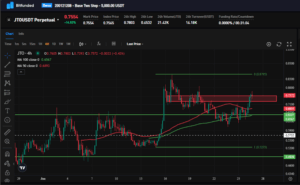
If rejected, the first pullback support sits near $0.69, followed by $0.66.
APE has recovered strongly and is now challenging the important $0.152 resistance level. A breakout would expose the next targets around $0.169 and $0.188.
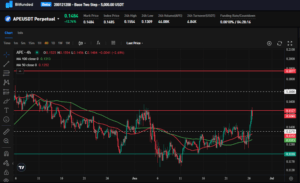
Failure to break higher would likely result in a retest of support near $0.135.
PIPPIN continues defending the critical $0.0153 support level while consolidating around its key moving averages.
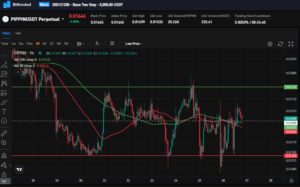
As long as support holds, buyers remain positioned for another attempt toward $0.0175 resistance.
INJ has produced its strongest recovery in weeks after defending the $4.12 support zone.
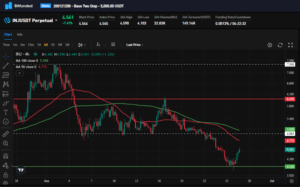
The next challenges sit at the 50-period moving average near $4.77 and the 100-period moving average near $5.06. Reclaiming both would significantly improve the technical outlook.
SOL continues holding above the major $61.6 support zone.However, the broader trend remains under pressure while price trades below the 50-period moving average near $78 and the 100-period moving average near $81.5.
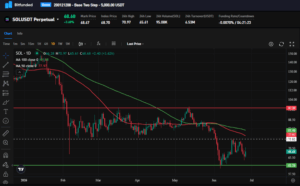
Reclaiming the $75-$78 region would strengthen the recovery and expose the next upside target near $97.
TRADE GLOBAL MARKETS WITH BITFUNDED
Volatility creates opportunity for disciplined traders.
With Bitfunded, you can trade crypto, forex, commodities, and indices using funded capital while keeping your own capital protected.
- Trade major macro events
- Access funded trading accounts
- Scale your strategies with confidence
- Keep more of your profits
Start your funded trading journey with Bitfunded today.
The Bitfunded Team